MAYFAIR CONSULTING

Complex business.Engineered intointelligent systems.

Mayfair designs and builds the automation, software and vision systems behind well-run operations — for organisations whose work doesn’t fit off-the-shelf tools.

Scroll
Agent orchestrationLive
Human in the loop0 decisions made
MayfairOrchestrator
Voice
Calendar
VLM
ERP
Healthcare
Inbox
Analyst
Procurement
Agents do the work · people make the calls
One orchestrator coordinates voice, calendar, vision, ERP and healthcare agents, and stops for a person wherever judgment is needed. Illustrative simulation.

Technology should fit the business.Not the other way around.

Our position

Most organisations don’t need another platform to adapt to. They need someone who understands how the operation actually runs — then designs, builds and integrates the system that makes it faster, more accurate and easier to manage.

We take responsibility for the whole arc: the business problem, the architecture, the software, the integration and the scale-up.

Strategy · productsDiagnose first, build secondSee how we work
  • Operations diagnostic

    Map how work really flows: volumes, hand-offs, exceptions and the cost of each.

    Process mappingBaseline metrics
  • Automation & AI roadmap

    Opportunities ranked by value and effort, each with a business case you can take to the board.

    Business casePrioritisation
  • Solution architecture

    The target system designed before any code: data, integrations, controls and security.

    ArchitectureIntegration plan

02Capabilities

Six disciplines.One accountable practice.

Systems built around the way your business actually works — designed, engineered and integrated by the same team.

  1. Automated guided vehicles moving goods across a warehouse floor

    Automation that connects people, processes and data.

    AI agents and workflows that take on document handling, approvals, communications and reporting — wired into the systems you already run, with people in the loop where judgement matters.

    • Workflow automation
    • AI agents & agentic workflows
    • CRM automation
    • Document & email automation
    • WhatsApp automation
    • Approval workflows
    • Reporting automation

    BPO · Healthcare · Manufacturing · Services

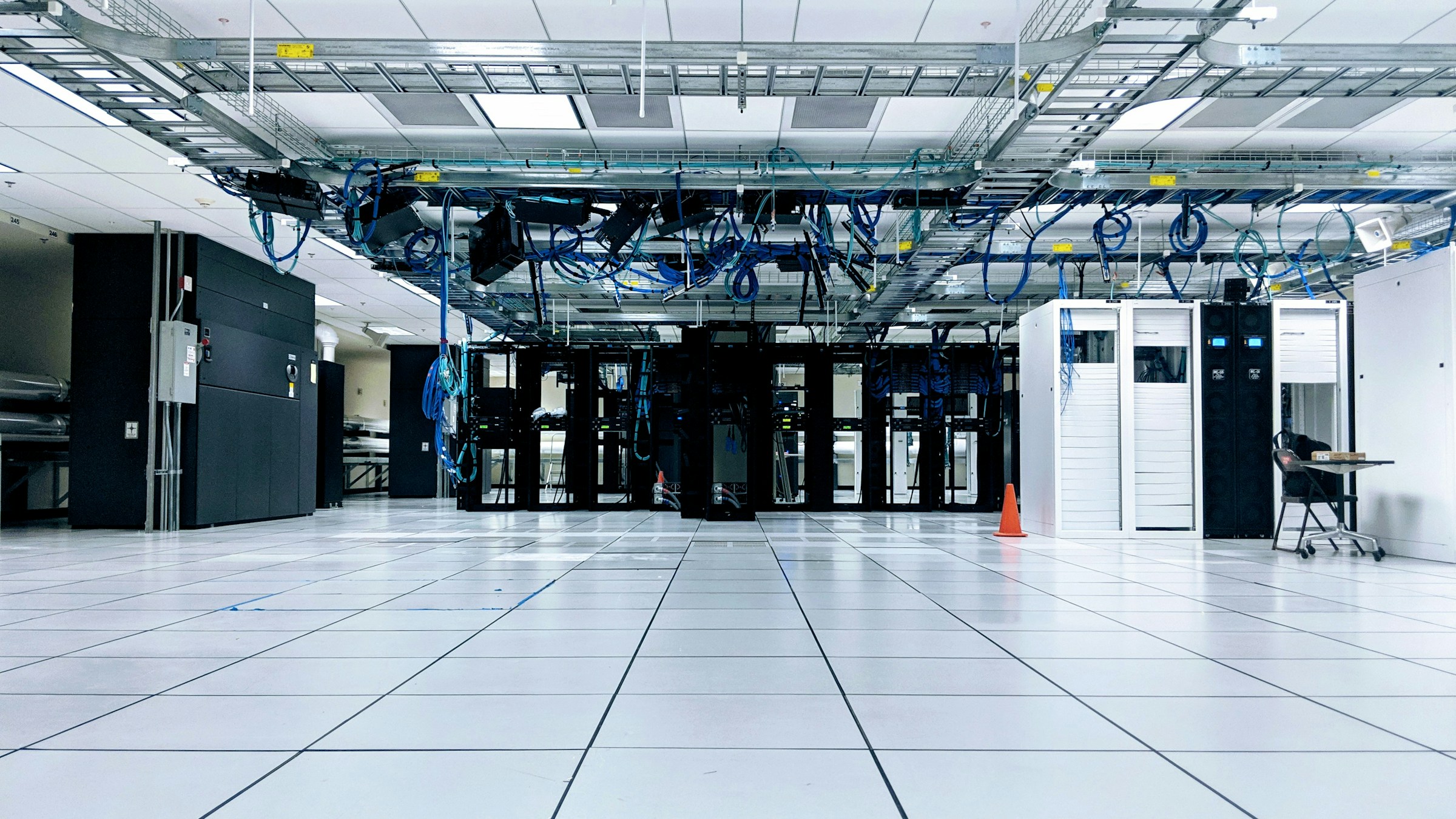
  2. Rows of servers in a data centre

    Technology built around the way your business actually works.

    Custom applications designed from your operating model outward — internal tools, portals, platforms and products that fit the process instead of forcing a new one.

    • Enterprise & web applications
    • Internal tools & dashboards
    • Customer portals
    • Management & workflow platforms
    • SaaS products
    • Mobile applications
    • API integrations

    Enterprise · Healthcare · Manufacturing · Services

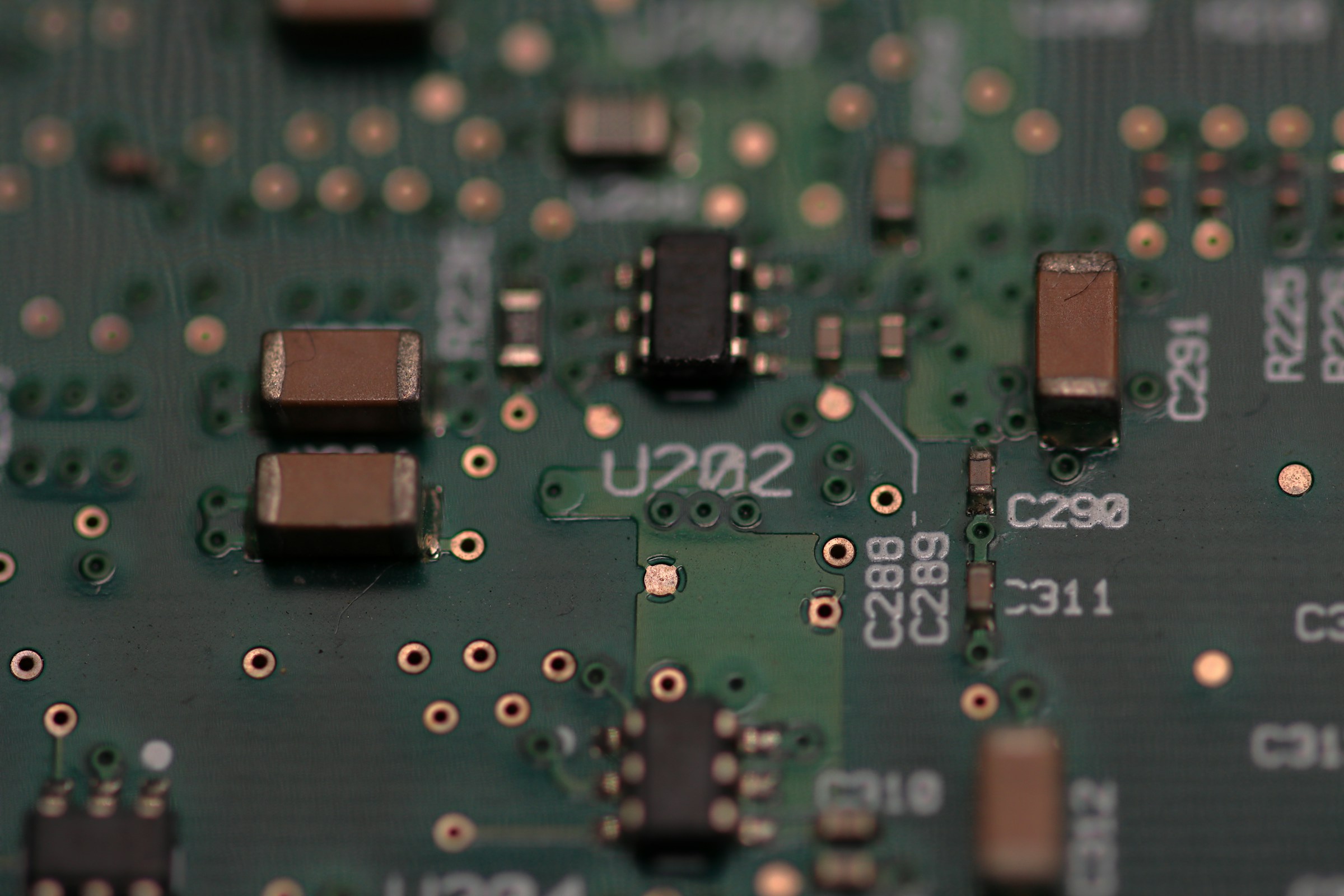
  3. Close-up of a component under inspection

    Computer vision for environments where visibility matters.

    Computer vision systems for real environments — production floors, inspection lines, clinical and back-office workflows — that detect, decide and trigger action in real time.

    • PPE & safety compliance
    • Defect detection & product inspection
    • Production & equipment monitoring
    • Accident & theft detection
    • Medical image analysis support
    • Document intelligence

    Manufacturing · Healthcare · BPO · Enterprise

  4. Clinical environment

    Intelligence built into healthcare operations.

    Automation and software for the administrative and operational load around care — claims, documents, clinical workflows and the data that connects them.

    • Claims automation
    • Clinical workflow systems
    • Document processing
    • Healthcare AI
    • Data integration
    • Custom healthcare applications

    Providers · Payers · Healthcare BPO · Health-tech

  5. Shelves of operational records and files

    Process data, turned into operational intelligence.

    Technology for BPO, BPM and operations-heavy teams — process automation, quality monitoring and live visibility into how work actually flows.

    • Business process automation
    • Workflow optimisation
    • Quality & compliance monitoring
    • Document processing
    • Operational dashboards
    • Productivity intelligence

    BPO / BPM · Shared services · Healthcare · Enterprise

  6. Modern office tower facade

    Websites and platforms engineered like the rest of the system.

    Corporate websites, digital platforms and interactive experiences engineered for clarity, performance and conversion — built on the same foundations as our software.

    • Enterprise & corporate websites
    • High-conversion websites
    • Digital platforms
    • Customer portals
    • Interactive experiences

    All sectors

03Automation

Turn repetitive work intointelligent infrastructure.

We map a process end to end, then rebuild it as a system: AI where judgement can be modelled, rules where it can’t, and people where it matters.

Example — supplier invoice, from inbox to ledger

  1. 1

    Input

    An invoice, claim, email or form arrives through any channel.

  2. 2

    Data

    Fields are extracted, normalised and validated against source systems.

  3. 3

    AI

    An agent classifies the case, checks policy and drafts the next step.

  4. 4

    Decision

    Within tolerance, it proceeds. Exceptions route to the right person.

  5. 5

    Automation

    Systems are updated, approvals requested, stakeholders notified.

  6. 6

    Result

    The case closes with a full audit trail and feeds live reporting.

What we automate

AI agents
Task-specific agents that read, reason and act inside defined guardrails.
Workflows
Multi-step processes orchestrated end to end, with retries and visibility.
Integrations
ERP, CRM, EHR, email and messaging connected through clean APIs.
Document processing
Extraction and validation for invoices, claims, forms and contracts.
Communications
Email and WhatsApp handled, drafted or triaged automatically.
Approvals
Rules-based routing with escalation paths and complete history.
Reporting
Operational reports that assemble themselves on schedule.

04Custom software

Software built aroundyour business.

From operational complexity to working software. We don’t push organisations into generic products — we model the real workflow, then engineer around it.

Map how the work actually happens.

We sit with the people who run the process, document the real workflow, exceptions included, and agree what the system must change.

What we build

Web applications · Enterprise applications · Internal tools · Business dashboards · Customer portals · Management systems · Workflow platforms · SaaS products · Mobile applications · API integrations

05Vision intelligence

Give machines theability to see.

Computer vision for environments where visibility matters. Existing cameras become continuous, objective inspection — detecting what matters, deciding what it means, and triggering the right action.

Technician in a hard hat and face shield working at an electrical cabinet
Person 01 0.98
Hard hat 0.97
Face shield 0.91
Reflective tape 0.93
Gloves — not detected 0.88
Person 02 · hi-vis 0.84
Every person in frame checked against the equipment the task requires.Still photography with simulated annotations — illustrative.

Detections1 exception

  • Person 010.98
  • Hard hat0.97
  • Face shield0.91
  • Reflective tape0.93
  • Gloves — not detected0.88
  • Person 02 · hi-vis0.84

Decision

Electrical task without insulated gloves → supervisor notified, work order flagged.

Camera → Model → Detection → Decision → Action

Where it runs

Manufacturing
PPE compliance, inspection, defect detection, line throughput and equipment state.
Healthcare
Medical image analysis support, document intelligence and workflow visibility.
BPO
Document processing, quality monitoring and process compliance signals.
Enterprise Operations
Site safety, access, asset monitoring and incident detection.

06Industries

Built for operationswith real complexity.

We work where workflows are dense, regulated or high-volume — and where a better system changes the economics of the operation.

Industrial robot arm beside an automated production station
01 · Manufacturing

See production differently.

Problem
Safety, quality and throughput are monitored by people walking the floor and reviewing footage after the fact. Issues surface late, and data lives in disconnected systems.
Technology
Vision AI for PPE, safety zones and defects · Production & equipment monitoring · Operational dashboards · Maintenance and QC workflows
Outcome
Continuous, objective visibility of the floor — with alerts at the moment something goes wrong and data that feeds directly into quality and safety reporting.
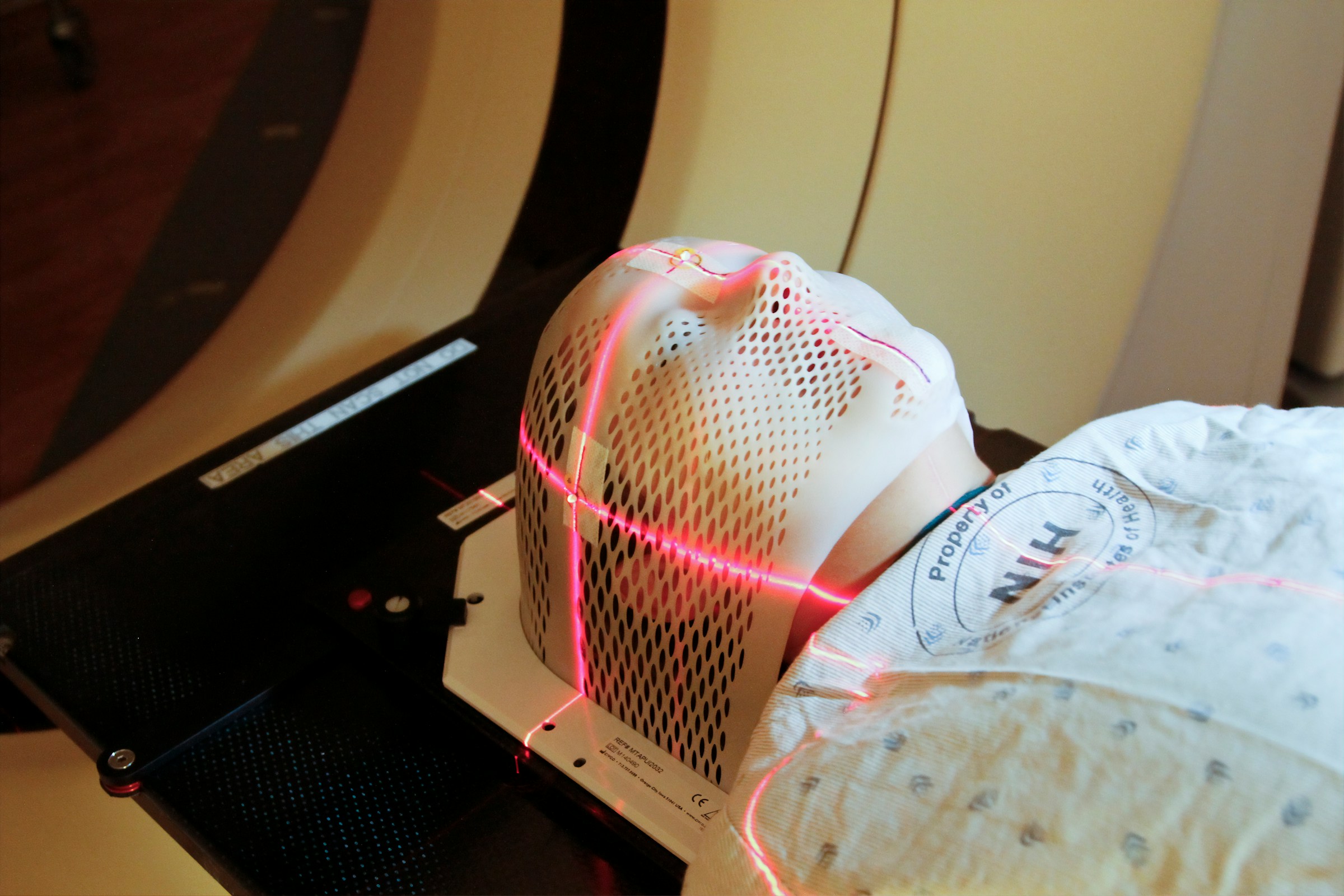
Radiotherapy positioning mask aligned with laser guides
02 · Healthcare

Build intelligence into healthcare operations.

Problem
Clinical and administrative teams carry heavy manual load: claims, documentation, scheduling and data moving between systems that were never designed to talk.
Technology
Claims & document automation · Clinical workflow systems · Healthcare AI & data integration · Custom healthcare applications
Outcome
Less time spent on administration, fewer hand-offs and errors, and cleaner data flowing between clinical, financial and operational systems.
Row of barcoded record binders on a shelf
03 · BPO

Turn process data into operational intelligence.

Problem
Volume-driven operations depend on manual processing, sampled quality checks and reporting that arrives too late to change the outcome.
Technology
Process & document automation · AI agents for repetitive tasks · Quality and compliance monitoring · Productivity intelligence dashboards
Outcome
Higher-capacity teams focused on exceptions, broader quality coverage, and live insight into how work is flowing across clients and processes.
Data centre floor with server racks and overhead cable trays
04 · Enterprise

Technology designed around complex organisations.

Problem
Large organisations run on a patchwork of tools, spreadsheets and workarounds. Off-the-shelf software covers the average case and none of the specifics.
Technology
Custom enterprise platforms · Systems integration · Workflow & approval automation · Business intelligence
Outcome
One coherent operating layer that matches how the organisation actually works — and can change as quickly as the business does.

07How we work

From problemto production.

One accountable team from the first workshop to the live system. Every phase ends with something concrete you can review.

  1. 01

    Understand

    We study the operation, the people and the constraints before proposing anything. The output is a clear problem definition and success criteria.

    Discovery report · process maps

  2. 02

    Architect

    We design the solution end to end — data, services, AI components, integrations and security — and validate it against the real workflow.

    Solution architecture · roadmap

  3. 03

    Build

    Senior engineers build in short, demonstrable increments. You see working software early and steer it continuously.

    Working increments · test suites

  4. 04

    Integrate

    We connect the system to your existing stack and data, and run it alongside current processes until it proves itself.

    Integrations · migration plan

  5. 05

    Deploy

    Staged rollout with training, documentation and monitoring in place from day one.

    Production release · runbooks

  6. 06

    Optimise

    We measure how the system performs, tune models and workflows, and extend it as the business evolves.

    Performance reviews · iterations

08Selected solutions

Systems wedesign and deliver.

Representative solutions showing how we approach recurring problems. They describe solution patterns, not named client engagements.

  • Challenge

    A multi-line facility needs consistent PPE compliance and earlier detection of product defects without adding inspectors.

    Representative solution

    Approach

    Existing CCTV is connected to vision models running at the edge. Detections are scored, filtered and routed to supervisors, with every event logged for review.

    Components

    Edge vision models · Event & alert engine · Supervisor app · Safety & QC dashboards

  • Challenge

    Claims arrive in mixed formats and are keyed, checked and corrected by hand before submission.

    Representative solution

    Approach

    Documents are classified and extracted automatically, validated against payer rules, and only exceptions reach a human reviewer.

    Components

    Document intelligence · Rules & validation engine · Exception workbench · Audit trail

  • Challenge

    Core operations are coordinated across spreadsheets, email threads and three legacy systems.

    Representative solution

    Approach

    A single custom platform models the real workflow, integrates the legacy systems and gives every role a task-focused interface.

    Components

    Custom web platform · Role-based workflows · ERP / CRM integration · Management reporting

  • Challenge

    High-volume back-office tasks — inbox triage, data entry, follow-ups — consume most of a team's capacity.

    Representative solution

    Approach

    Task-specific AI agents handle triage, extraction and drafting inside guardrails, with people approving anything outside policy.

    Components

    AI agents · Workflow orchestration · Email & WhatsApp channels · Human-in-the-loop review

  • Challenge

    Leadership decisions rely on reports assembled manually from several systems, days after the fact.

    Representative solution

    Approach

    Data pipelines consolidate operational sources into a governed model, with dashboards designed around the decisions each leader makes.

    Components

    Data pipelines · Governed data model · Executive dashboards · Automated reporting

09Technology

Technology chosen for the real constraints of your operation.

We’re tool-agnostic. Each layer is selected for the problem, the data and the environment it has to run in — cloud, on-premise or at the edge.

L1IntelligenceModels selected and tuned for the task — language, vision or prediction — and evaluated against real data.LLMs / VLMs / Computer vision / AI agents / ML models
L2ExperienceInterfaces for every role, on every device, built on modern web and mobile frameworks.Web / Mobile / Portals / Dashboards
L3AutomationOrchestration that moves work between people, systems and models reliably.Workflows / Agents / Integrations / Messaging
L4DataStructured, governed data that every other layer can trust.Databases / Pipelines / Analytics / APIs
L5CloudSecure, observable infrastructure — cloud, on-premise or at the edge, as the use case demands.Cloud / Edge / Security / Monitoring

Across every layer: access control, audit logging and observability are designed in from the first sprint.

10Why Mayfair

What makes the workhold up in production.

  1. 01

    Business-first technology

    Every engagement starts with the operating problem and the outcome it should produce.

  2. 02

    Custom-built systems

    We build around your process instead of bending it to fit a product.

  3. 03

    Complex workflow understanding

    Exceptions, hand-offs and edge cases are where systems succeed or fail. We design for them.

  4. 04

    Enterprise-ready architecture

    Security, permissions, auditability and scale are designed in, not retrofitted.

  5. 05

    Human + AI collaboration

    AI takes the volume; people keep the judgement. The boundary is explicit.

  6. 06

    Integration over isolation

    New systems connect to the ones you rely on, so data moves once and stays consistent.

  7. 07

    Long-term scalability

    Documented, maintainable systems that your teams can own and extend.

Pale modernist building with angled steel supports
Structure first. The rest follows from it.

11About

Business, technologyand intelligence —under one roof.

Mayfair Consulting is a consulting and business technology firm for medium-sized and large organisations. We are not a web shop, an AI lab or an outsourcing desk. We take responsibility for the whole problem — and the system that solves it.

We understand1, architect2, build3, integrate4 and scale5.

Who we work with

  • CEOs & Founders
  • COOs & Operations Directors
  • CTOs & CIOs
  • CFOs
  • Digital Transformation leaders
  • Healthcare executives
  • Manufacturing executives
  • BPO executives

Start here

Have a complexbusiness problem?

Let’s turn it into a system.

Write to us
contact@mayfairconsulting.in
WhatsApp
+91 90194 70090
What happens next
We read every inquiry and reply with a plain view of whether — and how — we can help.

Project inquiry

Let’s turn itinto a system.

Five short steps, then your inquiry opens in WhatsApp ready to send. No jargon required — describe the problem the way you would explain it to a colleague.

Step 1 of 5

Business

Tell us about your business.

Company size
Industry

Agentic AI in operations needs guardrails before it needs autonomy.

The value of an AI agent is set less by what it can do than by how clearly its boundaries are defined.

· 5 min read

Monochrome facade of a modern office tower

AI agents can now read documents, interpret requests, call systems and draft responses. In a back office, that covers a large share of repetitive work. The temptation is to give them broad scope quickly. The organisations getting durable results do the opposite.

Narrow, then widen

Start with a single, well-understood task with clear inputs and outputs — triaging an inbox, extracting fields from a known document type. Measure it against how the team performs today, then expand scope as evidence accumulates.

Make the boundary explicit

Every agent should have a written policy: what it may do alone, what needs approval and what it must always escalate. That policy becomes configuration, not a hope embedded in a prompt.

Keep a complete trail

Each action an agent takes should be logged with its inputs, reasoning summary and outcome. That record is what makes the system auditable, debuggable and, eventually, trusted with more.

People own the exceptions

The goal is not to remove people from the process but to move them to where judgement matters. Design the exception queue as carefully as the automation itself.

Working on something similar?

BPO automation is a quality story before it is a cost story.

Automation in high-volume operations is most valuable when it widens quality coverage and shortens feedback loops.

· 5 min read

Barcoded record binders on a shelf

In BPO and BPM operations, automation is usually framed as capacity: handle more volume with the same team. That matters, but it understates the opportunity.

From sampling to coverage

Quality assurance in most operations relies on sampling a small share of transactions. Automated checks can review every transaction against defined criteria, surfacing issues that sampling would miss.

Shorter feedback loops

When process data is captured as work happens, team leads see bottlenecks and errors the same day — not in the month-end report.

Design for client variation

Each client process has its own rules and exceptions. A configurable automation layer, rather than one-off scripts, keeps the operation maintainable as client portfolios grow.

Working on something similar?

Computer vision on the factory floor: start with the decision, not the model.

Most vision pilots stall because they optimise detection accuracy instead of the action that follows a detection.

· 6 min read

Close-up of a printed circuit board under inspection

The cameras are usually already there. Most facilities have CCTV covering lines, loading bays and walkways, recorded and rarely watched. That makes computer vision look like a quick win — and it is why so many pilots begin with a model and a demo video rather than a question.

Define the action first

A detection is only valuable if something happens next. Before choosing a model, define who is notified, within what time, through which channel, and what they are expected to do. A PPE alert that reaches a supervisor's phone in seconds changes behaviour; the same alert in a weekly report does not.

Accuracy is contextual

A defect detector that flags too often trains operators to ignore it. One that misses too often erodes trust. The right threshold depends on the cost of each error type, and that is a business decision as much as a technical one. Agree it explicitly, then tune against footage from your own lines.

Design for the edge cases

Lighting changes between shifts, products vary, cameras get knocked out of alignment. Production systems need monitoring for the model itself: confidence drift, camera health and periodic review of samples by people who know the process.

Integrate, don't isolate

The strongest deployments feed vision events into the systems teams already use — maintenance tickets, quality records, safety logs — so the data accumulates into something leadership can act on.

Working on something similar?

Custom software or off-the-shelf? Ask where your process is different.

Buy software for the parts of the business that are standard. Build for the parts that make you different.

· 4 min read

Data centre floor with server racks

Off-the-shelf software is the right answer for a large share of business needs. Accounting, email and HR rarely benefit from being rebuilt. The question is where your process genuinely differs from the average case the product was designed for.

Follow the workarounds

Spreadsheets maintained alongside a system, manual re-keying between tools and processes that live in someone's inbox are signals that the software does not fit the work.

Build around, not instead

Custom software rarely replaces everything. More often it fills the gaps between existing systems and gives each role an interface designed around their actual job.

Plan for ownership

Custom systems must be documented, tested and maintainable. Architecture choices made early decide whether a platform can evolve for years or needs replacing in two.

Working on something similar?

Where automation actually helps healthcare: the administrative load around care.

Claims, documentation and data movement are where automation can return time to clinical and operational teams.

· 6 min read

Radiotherapy positioning mask aligned with laser guides

Healthcare organisations carry a heavy administrative load around care itself: intake, documentation, coding, claims, follow-ups and reporting. Much of it involves moving information between systems that were never designed to talk to one another.

Start with the document flow

Claims and supporting documents arrive in many formats. Automated classification and extraction, combined with validation against payer and internal rules, lets reviewers focus on the cases that genuinely need them.

Integration is the hard part

Most value is unlocked not by a model but by reliable integration — with practice management, EHR and finance systems — so that data is entered once and stays consistent.

Governance from day one

Health data demands careful handling. Access controls, audit trails and clear data-retention rules should be part of the design, aligned with the regulatory requirements of each jurisdiction.

Working on something similar?

Operational intelligence: dashboards are the output, not the system.

Useful operational insight depends on the data model and pipelines underneath, not on the charts on top.

· 5 min read

Automated guided vehicle moving a rack across a factory floor

Many organisations already have dashboards. Fewer trust them. The difference is rarely the visualisation layer; it is whether the underlying data is complete, timely and defined consistently.

Define the decisions first

Each dashboard should exist to support a specific recurring decision. Starting from the decision clarifies which data matters, at what frequency, and at what level of detail.

Invest in the model

A governed data model with agreed definitions — what counts as an order, a case, a defect — prevents the conflicting numbers that undermine confidence.

Close the loop

The most valuable operational intelligence triggers action: an alert, a task or an automated workflow, not just a chart someone may look at later.

Working on something similar?

Legal

Last updated 17 November 2026

Privacy Notice

This notice explains what personal information Mayfair Consulting (“we”, “us”) collects through this website and how it is used.

Information we collect

  • Details you submit in our project inquiry form: your name, role, company, work email, phone number (optional) and the information you provide about your project.
  • Basic technical data your browser sends when loading the site, such as IP address and user agent, which may appear in server logs.

How we use it

We use inquiry details only to respond to you, assess whether we can help, and follow up on your request. We do not sell personal information or use it for unrelated marketing without your consent.

WhatsApp

The inquiry form opens WhatsApp with your answers written out as a message to our number, +91 90194 70090. Nothing is sent until you press send in WhatsApp. Messages you send us there are also handled by WhatsApp under its own terms and privacy policy.

Cookies

This site does not set advertising or analytics cookies. If that changes, this notice will be updated and, where required, consent will be requested.

Retention and security

Inquiry information is kept only as long as needed for the purposes above and protected with appropriate technical and organisational measures.

Your rights

Depending on where you live, you may have rights to access, correct or delete your personal information, or to object to its use. To make a request, contact contact@mayfairconsulting.in.

Contact

Questions about this notice can be sent to contact@mayfairconsulting.in.

Legal

Last updated 1 October 2026

Terms of Use

By using this website you agree to these terms. If you do not agree, please do not use the site.

Information on this site

Content on this website is provided for general information. Solutions described as “representative” illustrate approaches and are not descriptions of specific client engagements. Nothing on this site constitutes an offer or a binding commitment; engagements are governed by a separate written agreement.

Intellectual property

The site design, text, graphics and code are owned by Mayfair Consulting unless stated otherwise and may not be reproduced without permission.

Acceptable use

You agree not to misuse the site, including attempting to gain unauthorised access, interfering with its operation, or submitting unlawful or misleading information through its forms.

Liability

The site is provided “as is”. To the extent permitted by law, we are not liable for losses arising from its use or from reliance on its content.

Changes

We may update these terms from time to time. The date above shows when they were last revised.

Contact

contact@mayfairconsulting.in